
Supervision in social care has always been a cornerstone of good care delivery. For care providers and Registered Managers, effective staff supervision represents quality assurance, accountability, regulatory compliance, and the human connection that underpins safe, person-centred care.
In many care businesses, supervision has quietly become one of the most expensive operational processes in the organisation. This is not because supervision itself lacks value, but because of everything that surrounds it. Scheduling supervision meetings, sending reminders, preparing documentation, completing supervision forms, writing reports, and managing follow-ups all sit largely on the shoulders of Registered Managers and senior staff. These are the same leaders whose time is already under constant pressure from CQC compliance, safeguarding responsibilities, audits, recruitment, and day-to-day operational management.
The result is a familiar tension across domiciliary care agencies and residential care providers. Supervision is taking place, but not always as consistently, strategically, or as deeply as leaders would like. Conversations can become rushed. Reflective practice becomes reactive. Individual development needs are addressed when time allows rather than when they matter most. Despite the hours invested, managers can still feel exposed when inspections ask for clear evidence of robust, structured, and individualised staff supervision.
This is not a supervision problem. It is an efficiency and process problem within social care management.
Many technology solutions claim to solve workforce challenges by reducing human interaction. In social care, that approach misses the point entirely. Staff supervision cannot and should not be automated away. It is a professional conversation that supports competency, reflective practice, safeguarding awareness, and continuous professional development.
CareBrain was built on a different principle for the adult social care sector. Technology should remove administrative friction, not relationships. Rather than replacing the manager and carer supervision meeting, CareBrain strengthens it by completing the structured preparation around it.
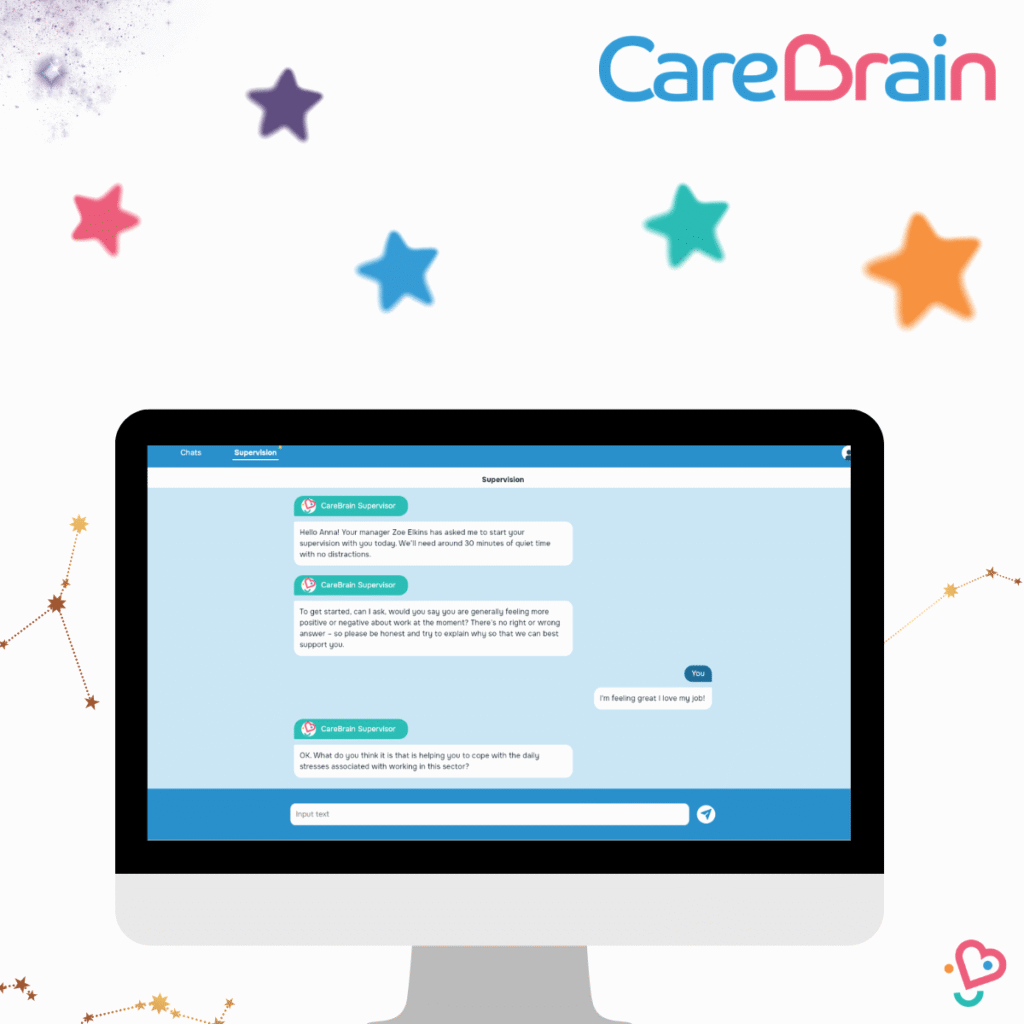
Before a supervision meeting takes place, the carer engages in a structured interaction with the CareBrain AI Supervisor. This is not a replacement for face-to-face supervision, but a structured preparatory conversation. It gives carers space to reflect honestly on their practice, respond to supervision questions tailored to the organisation, and highlight areas of confidence, challenge, performance, or development at their own pace.
Every supervision question is bespoke to the care provider. Each one reflects the organisation’s values, policies, procedures, competency frameworks, and regulatory requirements. This creates consistency in staff supervision structure without turning the process into a generic or impersonal exercise. It can also strengthen governance and inspection readiness by ensuring that supervision aligns with CQC expectations.
Following this interaction, CareBrain produces a full transcript and a clear, structured supervision report. Both the carer and the Registered Manager receive this in advance of the supervision meeting. This fundamentally changes the nature of the conversation. Managers no longer need to spend valuable time gathering information, prompting basic reflection, or writing extensive notes during or after the meeting. Time can instead be invested in meaningful discussion, coaching, constructive challenge, safeguarding oversight, and professional support, all grounded in the individual carer’s competency and reflective practice.
Each supervision becomes more individual, not less. At the same time, it becomes significantly more efficient and easier to evidence.
CareBrain also supports responsive supervision in social care when it matters most, not just when it is scheduled. Following incidents, safeguarding concerns, policy changes, medication errors, or emerging performance issues, additional supervision can be triggered quickly and consistently. Scheduling, reminders, and documentation are managed automatically, creating a clear, auditable record of reflection and management oversight without increasing workload for senior staff.
For care providers, domiciliary care agencies, and residential services, the impact of this approach is both commercial and operational. Time spent on supervision administration is reduced. Management capacity is released without increasing headcount. Staff supervision becomes more consistent, more defensible during inspection, and easier to scale as the organisation grows. Regulatory risk is reduced and sustainable growth is supported without overloading Registered Managers.
This approach does not remove the human element of supervision. It protects and enhances it. By removing administrative friction and improving structure, CareBrain enables better supervision conversations that are focused, compliant, reflective, and meaningful, while still operating in a way that makes commercial sense for the business.
Supervision in social care should scale with an organisation rather than hold it back. CareBrain makes this possible by delivering robust, structured supervision more efficiently, without losing the human connection that makes it effective.
If you would like to see how AI-supported staff supervision works in practice and understand how much time it could save your leadership team, get in touch with us to arrange a demonstration.